
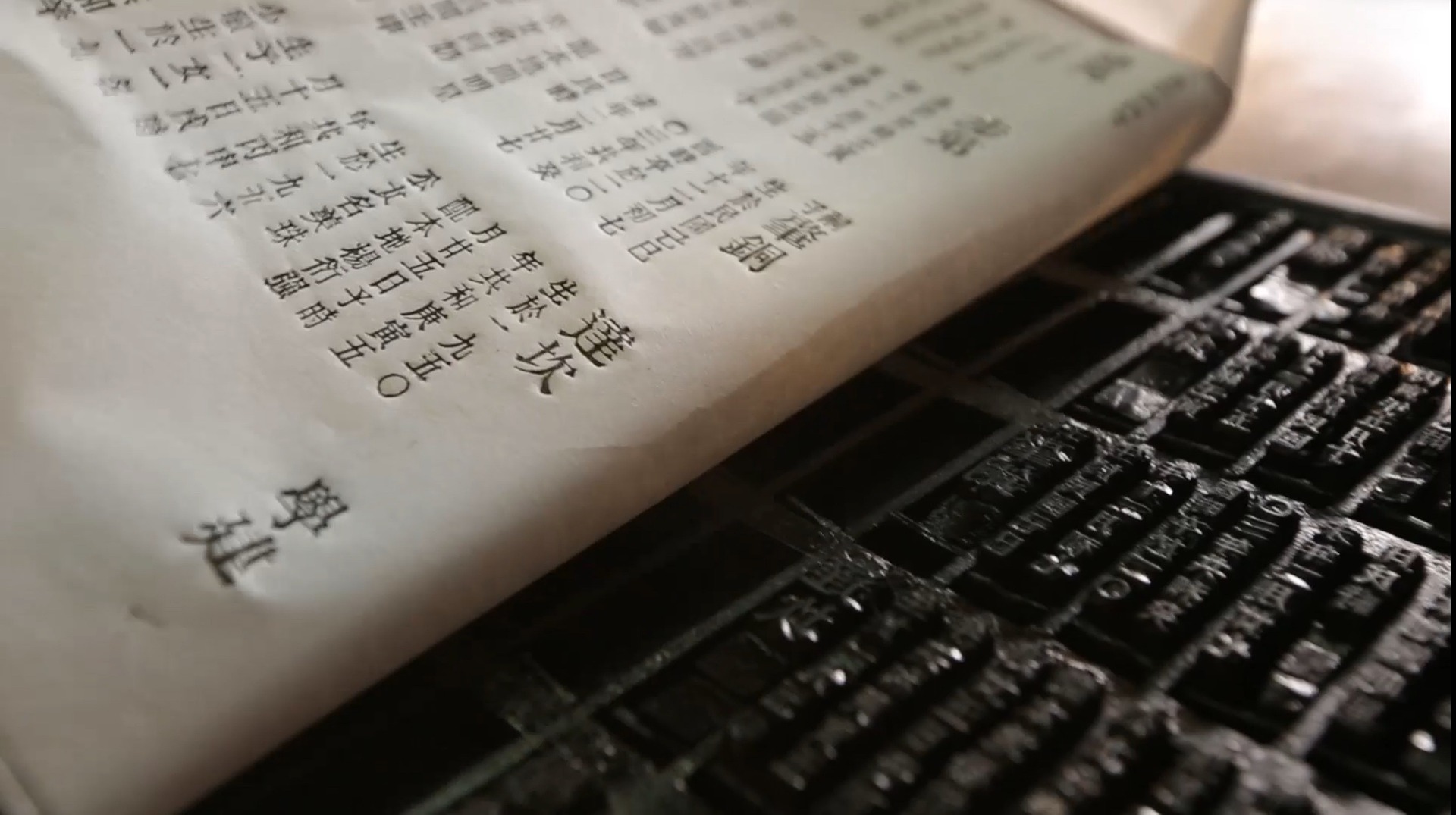
Imagine a world where every book, every word, or every letter had to be copied by hand! Every word meticulously transcribed, every page painstakingly reproduced often taking months or even years to produce a single volume. Knowledge traveled slowly, ideas were confined to the privileged few, and information was a precious commodity.
Then came an invention that would reshape human history: the movable type printing press.
The innovation didn’t just change the way we printed; it changed the way people thought, learned, and connected with one another.
The Birth of Movable Type
Long before Gutenberg’s press in 15th century Europe, the concept of movable type had already been explored in China around 1040 AD, thanks to an inventor named Bi Sheng.
Using clay characters, Bi Sheng created a system in which individual letters could be arranged on a printing surface, inked, and pressed onto paper. Unlike traditional woodblock printing, where entire pages were carved as a single unit, Bi Sheng’s system was modular: reusable, rearrangeable, and capable of producing multiple copies efficiently.
Wooden movable-type printing of China. Source: UNESCO
Later, in thirteenth-century Korea, the first known metal movable type was produced. This innovation allowed for more durable and precise printing compared to clay, setting the stage for the later European developments.
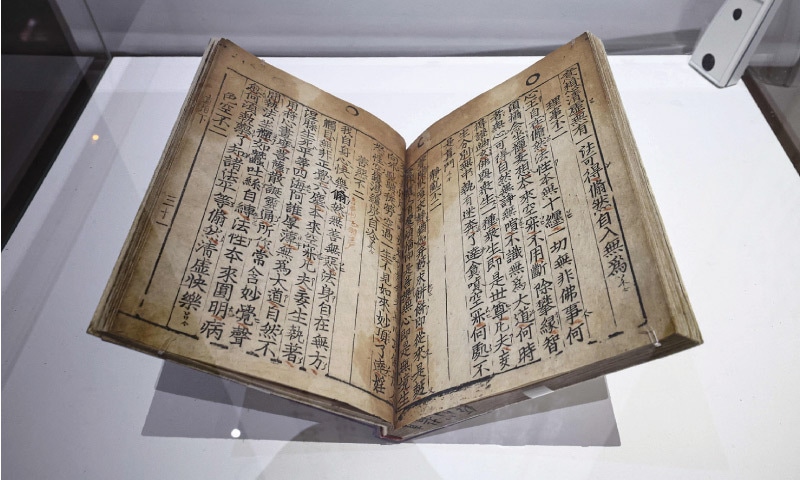
While this technology didn’t immediately transform society, it planted a seed: the idea that printing could be flexible, repeatable, and scalable. Printers no longer had to recreate each page from scratch…. a revolutionary concept for its time.
Gutenberg’s Press: The European Game-Changer
In 15th century Germany, Johannes Gutenberg combined movable type with mechanical innovation to create a press capable of mass-producing high-quality printed material.
Key innovations included:
- Movable metal type: Durable and uniform, allowing consistent text reproduction.
- Oil-based ink: Sharper and more reliable than water-based inks.
- Screw press adaptation: Applied even pressure to transfer ink to paper with precision.
How a Gutenberg Printing Press Works. Source: Sabrina Huyett
The Gutenberg Bible, printed around 1455, demonstrated the power of this new technology. Books could now be produced in larger quantities, more quickly, and at a fraction of the cost of hand-copied manuscripts. Knowledge was no longer limited to monasteries or the elite. It could reach more people, improving literacy and learning across Europe.
The Mechanics
The genius of movable type lay in its simplicity and efficiency. Each letter was cast in metal, arranged into lines and pages, inked, and pressed onto paper. Printers could reuse letters endlessly, producing new pages faster than ever before.
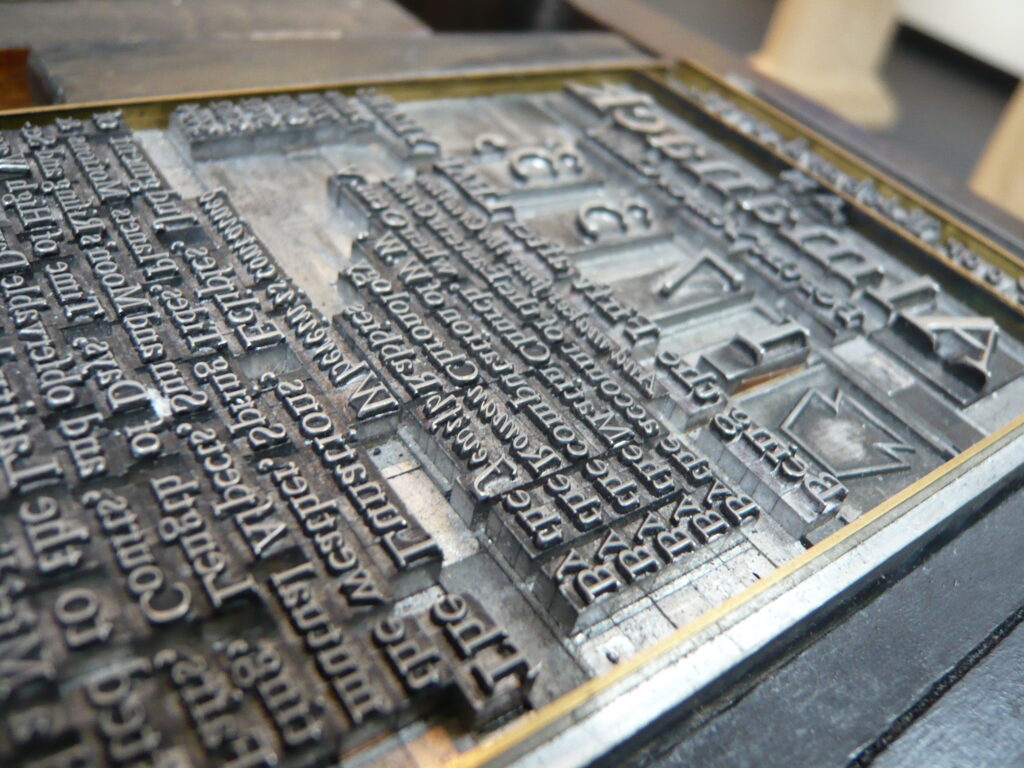
This also introduced standardization. Before movable type, every manuscript was unique, with variations in spelling, layout, and even content. With standardized printing, readers could trust the text, and scholars could reference works accurately.
Timeline: Key Milestones in Printing History
| Year | Innovation | Impact |
| 1040 | Bi Sheng invents movable type (China) | Introduces modular printing with clay characters, allowing multiple copies efficiently. |
| 1230s | Metal movable type produced in Korea (Goryeo Dynasty) | First known metal type, more durable and precise than clay, enabling faster and more reliable printing. |
| 1455 | Gutenberg prints the Bible (Germany) | Demonstrates mass production, consistent quality, and accessibility of books. |
| 1500 | Printing spreads across Europe | Newspapers, textbooks, and literature become widely available. |
| 19th Century | Industrial printing presses | Steam-powered and rotary presses increase speed, enabling mass circulation of newspapers and books. |
| 20th Century | Offset, laser, and inkjet printing | High-quality, on-demand printing becomes possible; digital typesetting revolutionizes publishing. |
| 21st Century | Digital and print-on-demand services | Books, documents, and even 3D-printed objects can be produced quickly and efficiently. |
The Legacy of Movable Type
Even today, every printed page owes a debt to the ingenuity of early printers. Movable type laid the foundation for:
- Modern publishing
- On-demand printing
- Standardized communication and education
This shows that technological innovation and cultural change are closely linked. The simple idea that letters can move helped spread literacy and knowledge worldwide.
Conclusion
The movable type printing press was more than a technological breakthrough; it was a cultural revolution in a box. From Bi Sheng’s clay characters to Gutenberg’s metal press, movable type transformed the way humans access, share, and preserve knowledge.
It made literacy more attainable, ideas more accessible, and information more democratic. Every book, every newspaper, and every printed page carries the legacy of this invention which continues to shape the way we communicate and think today.
—
Just as the movable printing press transformed how ideas traveled, today’s operations thrive when the right machine is paired with the right expertise. Machine Dalal connects buyers and sellers, ensuring that every machinery trade contributes to smooth, reliable print production. In an industry where timing and quality matter, having access to reliable machinery and trusted suppliers can make all the difference.
To explore business opportunities or partnerships, feel free to get in touch with us.