
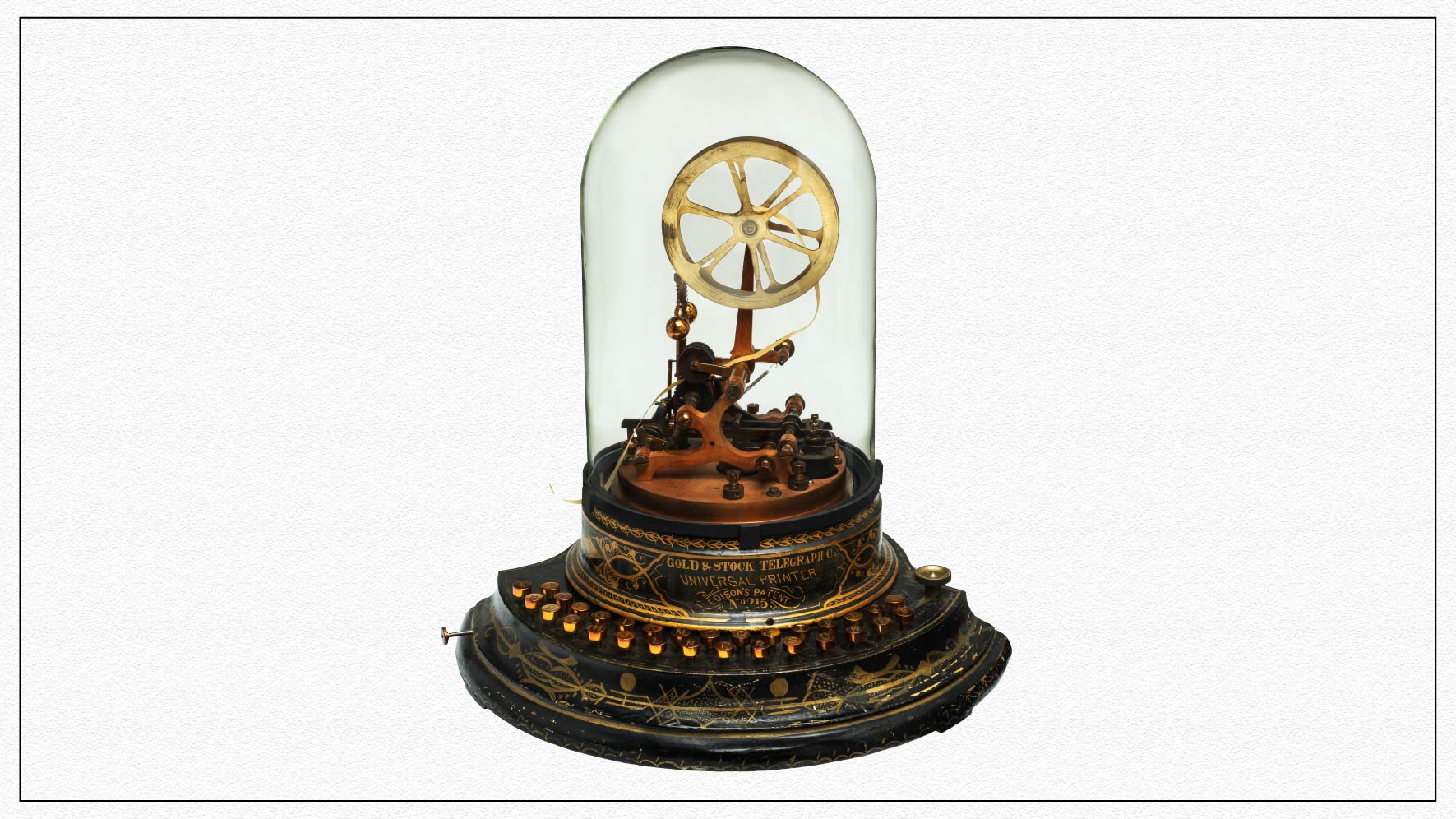
Before digital screens and instant notifications, stock prices traveled on paper.
The stock ticker, a mechanical marvel, revolutionized how financial information moved across the world.
Before the digital systems became widely adopted, ticker machines supplied vital stock market information to traders. Prices, symbols, and trades were printed line by line on the ticker tape, creating a continuous flow of data in real-time.
A Small Machine That Powered Markets
In the 19th century, stock exchanges were growing, but information moved slowly. Prices were written by hand, shared verbally, or sent as delayed reports. This created gaps between trades and awareness.
The stock ticker changed that. Connected to exchanges via telegraph wires, it printed price updates almost immediately after a trade occurred, delivering a continuous flow of data to brokerage offices, businesses, and news organizations.
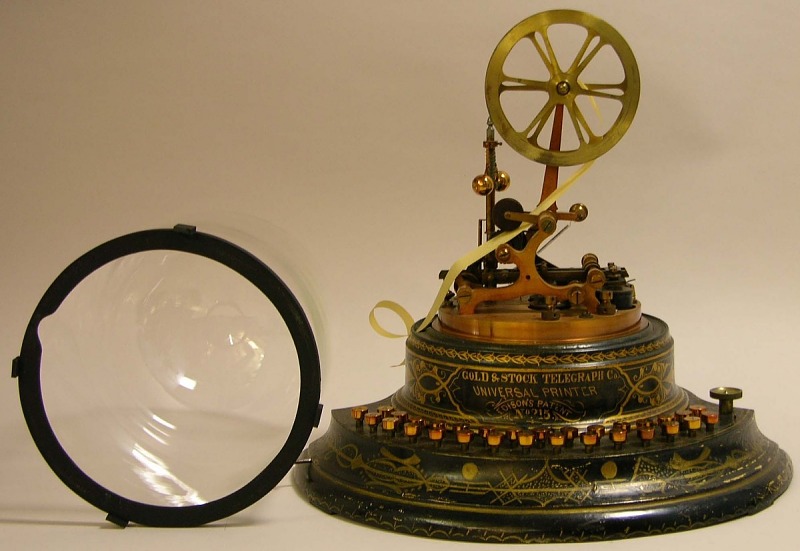
At its core, the stock ticker was a precision printing device. It translated electrical signals from telegraph lines into printed text on a narrow, continuous paper strip. Unlike general-purpose printing presses, the ticker was built for one task: printing financial data continuously, accurately, and at speed. It operated without interruption during trading hours, producing a readable record that brokers could reference instantly.
How the Ticker Worked
The ticker’s engineering was simple but precise:
- Market data arrived as coded electrical signals through telegraph wires.
- Inside the machine, these signals activated rotating type wheels.
- Each character printed sequentially onto thin paper that fed continuously through the device.
- The tape displayed abbreviated company symbols, current prices, and trade volumes.
- Brokers read the tape as it emerged, cutting and pinning sections for reference.
The machine needed to print clearly, consistently, and fast enough to keep pace with active trading.
Why It Was Called a “Ticker”
The name came directly from its operation. As the machine’s gears and type wheels struck the paper, they produced a steady ticking sound. This rhythm became synonymous with market activity.
Traders began calling both the machine and its printed output the “TICKER,” and the name endured even as the technology evolved.
The Printing Challenge: Speed vs. Accuracy
As markets grew, the ticker faced a classic printing dilemma: balancing speed with accuracy.
During periods of heavy trading, the volume of data could overwhelm the machine which caused printed prices to lag behind actual trades. Faster printing, smoother paper movement, and clearer signals became essential as markets expanded.
From Mechanical Gears to Electronic Screens
By the mid-20th century, mechanical printing reached its limits. Electronic displays began replacing paper-based systems in the 1960s, and by the 1990s, computer screens had taken over entirely.
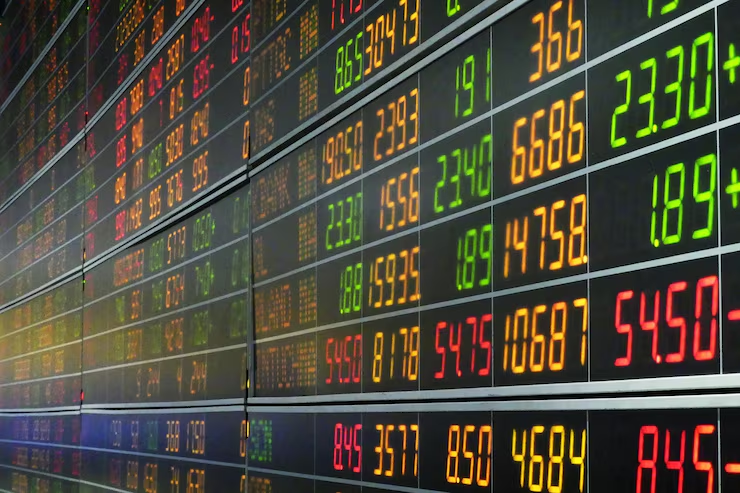
Yet the transition preserved the core function: continuous, sequential display of market information. Digital “tickers” still scroll across screens today, maintaining the visual language established by their mechanical predecessors.
Historical Timeline
1867:
Edward A. Calahan invented the first practical stock ticker, enabling automated printing of stock prices transmitted over telegraph lines.
Early 1870s:
Thomas Edison improved the design while working with the Gold & Stock Telegraph Company, securing patents that made the machines faster and more reliable.
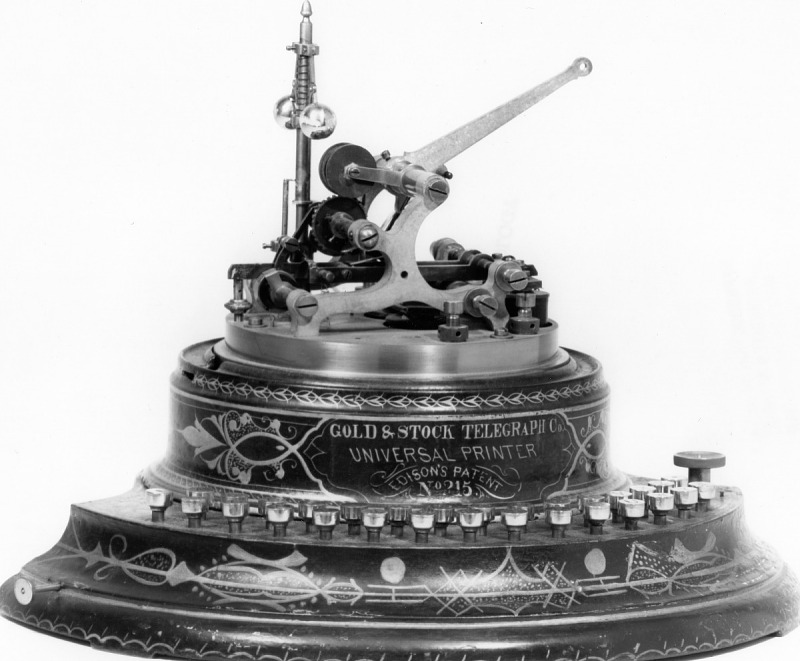
1870s–1890s:
Ticker machines spread across brokerage offices. Continuous paper ribbons became the standard format for live market updates.
Early 1900s:
Mechanical and electrical improvements increased printing speed and reliability.
1960s:
Electronic displays began replacing mechanical printing systems.
1990s:
Internet-based systems eliminated paper entirely, though the “ticker” concept remained.
Why the Stock Ticker Still Matters
The stock ticker demonstrated that specialized printing machines could serve critical commercial functions beyond books, newspapers, or documents.
It showed that printing technology could be:
- Continuous: Operating without stopping during business hours
- Real-time: Printing information as it happened, not hours later
- Networked: Receiving data remotely and printing locally
- Reliable: Trusted for financial decisions worth significant money
These principles influenced the development of later printing technologies, from wire service teleprinters to modern network printers.
Beyond its technical innovations, the ticker also left an indelible mark on popular culture.
Ticker machines became standard equipment in brokerage offices across New York in the late 1800s. Paper ribbons would often accumulate quickly. During major celebrations, office workers would toss the ribbons out of windows, creating the famous ticker-tape parades that remain a celebrated part of New York City’s identity.
A Printing Machine That Changed Commerce
The stock ticker may no longer sit in brokerage offices, but its legacy remains. It demonstrated that information could be printed continuously, shared instantly, and trusted across distances. In doing so, it connected printing, communication, and finance in a way few machines ever have.
The paper ribbon is gone, but the idea it introduced still shapes how markets move today.
Machine Dalal is the global trading platform for the printing, packaging, and converting industry — designed to evolve with the needs of the market. We are continually innovating – from powerful search tools to integrated social media marketing, a growing newsletter audience, and our newly launched digital magazine, we are building a robust ecosystem to support print machinery sellers and buyers worldwide.
For a more personalized experience, download our mobile apps on Android and iOS.
To explore business opportunities or partnerships, feel free to get in touch with us.